
Dastidar Lab
Neurodegeneration and Neurotherapeutics Co-laboratory

PEOPLE
Somasish Ghosh Dastidar, M.Sc., M.S., Ph.D.
Principal Investigator
Dr. Dastidar was born in Eastern India in the quiescent town of Chinsurah by the river Ganges. He did his Bachelors in Microbiology from the University of Pune, Maharashtra and his Masters in Biotechnology from Visva Bharati University, West Bengal. During his Masters he did a thesis project on the role of Aeromonas hydrophila in the etiology of epizootic ulcerative syndrome with Prof. Shibnath Mazumder. Later he worked briefly with Prof. Swadesh Ranjan Biswas of Visva Bharati University where he worked on the identification of a food grade preservative Nicin. Dastidar moved to the US and obtained a MS & PhD in Cell and Molecular biology from the University of Texas at Dallas. Dr. Dastidar did his graduate work in the lab of Prof. Santosh D’Mello, University of Texas at Dallas, where he investigated the role of transcription factors, in the modulation of neuronal survival/apoptosis and the underlying mechanism(s) behind these processes.
After his PhD, Dastidar decided to join the laboratory of Prof. Albert La Spada, who has developed an extensive research program in neurodegeneration and neurotherapeutics, and notably for the tremendous fertile research environment in UCSD and its adjoining institutes in San Diego. Dr. La Spada is credited for the discovery of trinucleotide repeats in the etiology of Spino-Bulbar Muscular Atrophy, the first in a series of many repeat nucleotide disorders. During his postdoctoral training Dastidar built on his foundation, to learn microarray analysis to study miRNA expression & regulation patterns, generation of sophisticated transgenic mice models, characterization of the mice behavioural and histopathological analysis, stereotactic surgery for delivery of lentivirus or drugs in different parts of the brain, stem cell modelling and CRISPR/Cas9 based genome editing and a host of cell biological processes such as autophagy, stress granule biology, unfolded protein response, proteasomal machinery, nucleolar stress critical for cell homeostasis Dr. Somasish has extensive expertise in making and characterizing transgenic mice, working with knock in mice and triple transgenic mice. He uses animal cell lines, primary neuronal cells, primary glial cells and induced Pluripotent Stem cells as models to test his scientific hypothesis with a clear and defined focus on identifying genetic targets for therapeutic possibilities. Somasish has published in Cell Metabolism, Acta Neuropathologica, Nature Neuroscience, Journal of Neuroscience, Journal of Biological Chemistry, Journal of Clinical Investigation, eLife, Cell Reports, GeroScience etc. Somasish has mentored over 30 undergraduate and graduate students during his PhD and postdoctoral training. Currently he is mentoring 2 postdoctoral scholars, 7 PhD scholars and co guiding 4 Phd scholars. Dastidar enjoys mentoring budding scientists (M.Sc and B.Sc) and is very passionate about it.
Out of the lab, Dastidar enjoys having a stroll by the Malpe Beach or End-point, visiting the Krishna Temple, cooking and oil-painting. He remains much attached to his family and friends. If you are visiting Manipal, Somasish would gladly be your tour guide!


ICMR Research Scientist-I (Post-Doctoral Fellow)
Rajarshi completed his M.Sc. and Ph.D. in Molecular Microbiology at Visva-Bharati (A Central University), Santiniketan, West Bengal, India specializing in genome editing, Food grade drug formulation and biomedical applications such as oncology and irritable bowel syndrome, under the mentorship of Prof. Swadesh Ranjan Biswas & Dr. Sukhendu Mandal. In his postdoctoral tenure, Rajarshi has delved into the implications of oxidative stress, mitochondrial biology, autophagy, neuroinflammation and chaperone systems in PD. Rajarshi has significant experience with experiments on mice and employs mammalian cell lines, primary neuronal and glial cells, as well as induced pluripotent stem cells to test his scientific hypotheses. His work is geared toward identifying genetic targets for therapeutic applications. Outside the lab, Rajarshi enjoys leisurely walks along Delta Point, Kodi, or Maravanthe Beach, and visiting the Krishna Temple. He values quality time with his family and friends and is known for being a fun-loving companion. Additionally, he has a passion for animals and aquarium fish.


ICMR Project Technical Assistant/ Animal Vivarium Manager
Renuka is an experienced professional with a strong academic background in Mathematics, Physics, and Chemistry, holding a B.Sc. degree from Dr. G Shankar Women's First Grade College, Udupi. Currently serving as an ICMR Project Technical Assistant and Animal Vivarium Manager at the Centre for Molecular Neuroscience, Kasturba Medical College, Manipal. Renuka brings over 6 years of diverse experience in the healthcare field, including 4 years as a Pharmacy Assistant at Sai Radha and 2.5 years as an Assistant Dispenser at Radha Medical.
Her expertise in pharmaceutical support, coupled with her technical role in a research environment, demonstrates her adaptability and commitment to contributing to both patient care and scientific advancement. Beyond her professional pursuits, Renuka enjoys reading books and drawing.

Graduate Student, Predoctoral candidate (MAHE-DEAKIN Cotutelle Research Scholar)
Shrilaxmi M S is currently a dedicated PhD scholar at the Centre for Molecular Neurosciences, KMC, MAHE, and a joint PhD candidate under the MAHE-Deakin cotutelle program, where she investigates the molecular mechanisms of melioidosis. Her area of interest also involves studying molecular mechanisms and pathophysiology of amyotrophic lateral sclerosis (ALS). She completed her bachelor’s degree in microbiology, Biochemistry, and Botany from Alva's College, followed by a master’s degree in medical microbiology from Kasturba Medical College, MAHE. Her academic background has provided her with a strong foundation in microbiological research. Shrilaxmi's research aims to uncover critical insights into the pathogenesis of melioidosis, potentially leading to improved therapeutic strategies. In addition to her scientific endeavors, she has a passion for music, enjoys listening to various genres, and has a talent for singing. Her commitment to her studies and her love for music reflects her well-rounded personality and dedication to both science and the arts

VenkataSurya kumar, B.Pt, M.Sc (Medical Anatomy)
Graduate Student, Predoctoral candidate
Surya hails from a remote village called Devarajupalli. Venkata pursued his Bachelor of Physiotherapy from Sri Balaji Institute of Surgery Research and Rehabilitation for the Disabled (BIRRD). BIRRD is a premier medical institute that treats patients suffering from polio, cerebral palsy, congenital anomalies, spinal injuries, and orthopedically disabled individuals. There, he was introduced to several congenital and developmental disorders, which created an interest in Anatomy.
Subsequently, he qualified for the Master’s program in Medical Anatomy at MAHE, the best three years of his life! His passion for teaching took him to AIIMS Bhopal, where he taught Anatomy for six years. Surya qualified for the TMA Pai PhD entrance examination and chose to join the Dastidar lab in the Center for Molecular Neurosciences. Surya focuses on enviornmental toxins during neuronal development.
Surya's is a numismatic and a gardener! He loves classical music. He is an awesome dad, a biker and proud owner of the Royal Enfield. Someday, he would like to possess a patent or write a book!

Sindhu Sree, B.Sc, M.Sc (Medical Biochemistry)
Graduate Student, Predoctoral candidate (UGC-SJSGC Fellow)
Sindhu was born in Kurnool, Andhra Pradesh, Southern India. She completed her bachelor's degree in Biochemistry, Microbiology, and Chemistry, and is a university topper in Biochemistry. She then pursued a Master’s degree in Medical Biochemistry at Kasturba Medical College. During her academic journey, she presented her research at national conferences and secured second rank in the prestigious Dr. TMA Pai PhD entrance examination. Upon joining the PhD program, she was awarded the Savitribai Jyotirao Phule fellowship from UGC. Sindhu's current research focuses on Burkholderia pseudomallei, the causative agent of Melioidosis, and Burkholderia cepacia, which is associated with Cystic Fibrosis. Her work explores host-pathogen interactions, the role of non-coding RNA, and protein translation in these bacteria. Beyond her scientific pursuits, Sindhu is passionate about spending time with her family, painting, poetry, and stargazing at the beach. She is also dedicated to animal rescue and advocacy.

Prajwal BG, B.Sc, M.Sc (Medical Biochemistry)
Graduate Student, Predoctoral candidate, TMA Pai Research Scholar
Prajwal BG is a dedicated researcher with a strong academic background in Chemistry, Botany, and Zoology. He holds a B.Sc. degree from Bangalore University and an M.Sc. in Medical Biochemistry from Kasturba Medical College, MAHE, Manipal. Currently focused on Parkinson’s Disease, Prajwal's research at Dastidar’s Lab explores the role of translational repressors and molecular chaperones, particularly their interactome in maintaining cellular homeostasis and responding to stress induced by parkinsonism.
Prajwal is passionate about advancing the understanding of neurodegenerative disorders, with a particular emphasis on molecular mechanisms underlying Parkinson’s Disease. Outside of research, Prajwal enjoys traveling, hiking, trekking, and engaging in adventure sports, reflecting a love for exploration and challenge both in and out of the lab.

Varshith MR, B.Sc, M.Sc (Microbiology)
Graduate Student, Predoctoral candidate (MAHE-DEAKIN Cotutelle Research Scholar)
Varshith is a Cotutelle research scholar under the Manipal Academy of Higher Education, Manipal – Deakin University, Australia joint doctoral program. As a resourceful microbiologist with a strong background in molecular and cell biology, he is passionate about research. He had previously completed his graduation (B.Sc.) specialising in Biochemistry, Genetics and Biotechnology from Bangalore University and post-graduation (M.Sc.) from the Jain (deemed-to-be) University at Bengaluru with specialization in Microbiology, and he had obtained extensive post-graduate research training from the National Centre for Biological Sciences, Bengaluru.
He is currently focusing on understanding key molecular mechanisms involved in the pathophysiology and host response to neuromelioidosis. Additionally, he is also honing in on understanding the molecular mechanisms pertaining to nuclear and nucleolar stress in multiple neurodegenerative diseases such as Parkinson's disease and ALS. Further, his research is aiming towards discovering small molecule drug targets to alleviate Parkinson's disease symptoms, and he is embarking on his training in computational modelling to understand protein-protein interactions to identify druggable molecular targets.
Besides holding the pipette, his personality reflects a vibrant passion for sports like cricket and badminton, as well as a deep love for travel and exploration. Varshith enjoys discovering new places, meeting diverse people, and experiencing different cuisines and cultures. With a creative flair, he is also passionate about storytelling and movie-making, showcasing his love for both adventure and art.

Saradindu Banerjee, B.Sc, M.Sc (Medical Biotechnology)
Graduate Student, Predoctoral candidate (MAHE-DEAKIN Cotutelle Research Scholar)
Saradindu Banerjee is a committed Deakin-MAHE joint PhD scholar at the Center for Molecular Neurosciences, KMC, MAHE, where he investigates the molecular mechanisms associated with depression and amyotrophic lateral sclerosis (ALS). He earned his bachelor’s degree in ‘Human Physiology’ from Hooghly Mohsin College in West Bengal, followed by a Master's degree in ‘Medical Biotechnology’ from the Manipal School of Life Sciences, MAHE. His academic path showcases a deep interest in the complexities of neurological disorders.
In addition to his research, Saradindu is passionate about reading novels, which complements his scientific pursuits by enhancing his creativity and critical thinking. His work aims to contribute significantly to the field of neuroscience, potentially leading to breakthroughs in treatment strategies for mental health and neurodegenerative conditions.
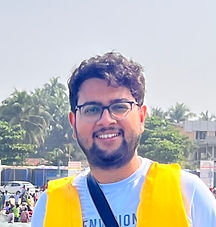
Priyajit Changdar, B.Sc, M.Sc (Medical Physiology)
Graduate Student, Predoctoral candidate (ICMR Research Scientist-I)
Priyajit Changdar, is a research scholar from Beliaghata village in West Bengal, India. Having completed his schooling in his home state, he pursued a Bachelor of Science degree in Physiology from Vidyasagar University. Subsequently, he earned a Master of Science in Medical Physiology from Kasturba Medical College, Manipal, where he was part of the Dastidar Lab. Currently, he is a PhD candidate at the same institution, concurrently working as an ICMR Project Research Scientist-1 under Dr. Somasish Ghosh Dastidar at the Center for Molecular Neurosciences. His research interests encompass neurodegeneration, physiology, pharmacology, neurotherapeutics, and pharmacognosy. Under the guidance of Dr. Dastidar, Priyajit has developed expertise in animal handling, neurobehavioral experiments, histopathology, and cell culture techniques. A multifaceted individual, his hobbies include music, cricket, literature, and writing poetry.

Rajalakshmi R, Integrated M. Sc. (Biomedical Science)
Graduate Student, Predoctoral candidate, ANRF-SUPRA Junior Research Fellow, GATE, NET qualified
Rajalakshmi R is a Junior Research Fellow with a strong academic foundation in Molecular Biology, Neuroscience, Immunology and Cell Biology. She holds an Integrated M. Sc. Degree in Biomedical Science from Bharathidasan University, Tamil Nadu, India. She held the University 2nd rank. She has qualified in national level competitive examinations including CSIR- UGC NET, GATE (Life Science and Biotechnology), and TNSET, reflecting her academic rigor and research aptitude.
Her Master’s research focused on investigating the therapeutic potential of the bioactive compounds curcumin and piperine in ameliorating neuroendocrine dysfunction in a modern lifestyle stress induced PCOS rat model, highlighting her early interest in translational and mechanistic research.
Currently, her research explores the molecular mechanism underlying mitochondrial disorders in an Indian cohort, with the aim of developing novel diagnostic and therapeutic strategies. Her work involves studying disease-associated gene mutations, generating patient- derived induced pluripotent stem cells with defects in mitochondrial DNA maintenance genes, and establishing disease-specific transgenic mouse models to facilitate therapeutic development.
Beyond research, she enjoys exploring new experiences, maintaining an active lifestyle, solo travel, and connecting with nature. She values spending quality time with her family and friends, which complements her disciplined and curious approach to scientific inquiry.

Amala George,
Graduate Student, Predoctoral candidate, DST Inspire Fellow
Amala George holds a bachelor's degree in microbiology with a minor in chemistry from Sardar Patel University, followed by a master's degree in microbiology from Charotar University of Science and Technology. During her master’s program, her outstanding academic performance earned her the prestigious University Gold Medal.
In recognition of her research potential, Amala was awarded the DST‑INSPIRE Provisional Offer Letter (2024) to pursue her PhD, a testament to her strong scientific foundation and commitment to research excellence.
Amala has developed a deep interest in the molecular mechanisms underlying neurodegenerative disorders, particularly the role of reduced protein translation in disease pathology. She has been closely following research in this field and is especially motivated to explore microRNAs (miRNAs) as potential therapeutic modulators of neurodegenerative disorders such as ALS. Her long‑term goal is to contribute to the development of RNA‑based therapeutic strategies that can restore cellular homeostasis and mitigate neurodegeneration.

Current Undergraduate students
1. Megha Belpu - Dissertation project - M.Sc. Medical Biotechnology
2. Supriya Rani Kachhap - Dissertation project - M.Sc. Tissue Engineering
3. Lian Mathias - Dissertation project - M.Sc. Biotechnology
4. Samrakshni M - Dissertation project - B.Tech Biotechnology
5. Debleena Chakraborty-Dissertation project- M.Sc . Genome Engineering.
6. Ojaswini RV- Dissertation Project- B.Tech. Biotechnology
7. Akshay Arun Prasath. Dissertation Project. B.Tech Biotechnology

Former members


